
Proper lane management is a crucial aspect of the game that can often determine the outcome of a match. My method of lane management is using a very simple logic of balancing the lanes.
Minions
To begin with, each lane from both sides will spawn the minions of the same amount at the same time. There will be two melees minions and two ranged minions.
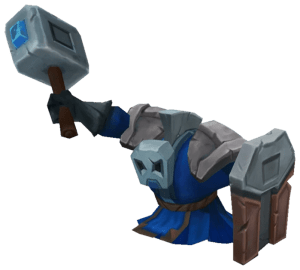
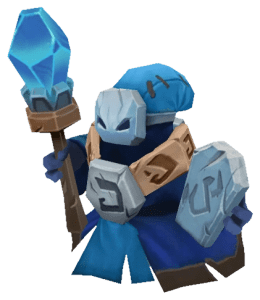
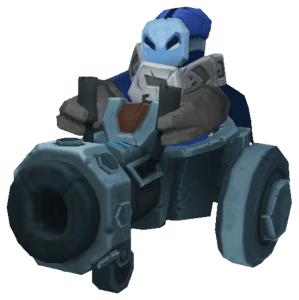
Minions are an essential component of lane management, and their behavior can be used to manipulate the lane to your advantage. More info on minion spawn times here (Minion spawn time and order will be constantly changed by Riot, so this is the most updated as of the writing of this guide).

When players kill an enemy minion, they earn gold and experience points. However, if players continuously kill minions without regard for their position in the lane, they can end up pushing the wave too far, making it difficult for their teammates to farm safely and increasing their vulnerability to ganks. Lane management is very closely related to our previous guide on the line of safety.
Balancing
An easy way to imagine the concept is to think that minions from both sides are having a pushing competition. Since both sides spawn the same amount and type of minions; both sides will always be balanced in the beginning. Imagine that all of the minion’s HP is combined to be one big weight and that they are constantly pushing against each other. When you do damage to one of the enemy minions, some weight from the other side is reduced. If you imagine that the minion on your side is heavier, then logically they will be able to push back the lighter enemy minion.

In this example, I’m setting each lane minion’s total weight to 200 grams. When the enemy’s Garren hit our minion let’s imagine that we lose 20 grams and their minion lost 10 grams from our attack. Their lane will now be heavier and start pushing to our side. Once you understand this concept, it is just a matter of balancing both sides and using it to your advantage.
Now that we know how balancing works and that minions provide EXP and Gold. We must apply this knowledge to all aspects of our game.
One tip for you: before you recall to purchase an item. Always push your lane so that your minions will be killed by their tower and not their champion. This will deny the enemy laner of some EXP and Gold.
Freezing Lane
One effective strategy for managing minion waves is known as “freezing” the lane. This involves allowing the enemy minions to push towards your turret and only last-hitting them, preventing your own minions from dying, and keeping the wave in a stable position just outside your turret range. This strategy can deny your opponents gold and experience, making it difficult for them to snowball their lead. This strategy can be used for both a defensive and offensive strategy. There are two situations in which you want to utilize the freezing method:
- You are behind and are in danger of dying all the time
- You are ahead and want to deny the enemy of minions.
In situation 1, you want to freeze the lane near your own tower so that the enemy can’t attack you without the risk of getting hit by the tower. Since the enemy is leading, you want to hug the tower (standing in tower range).
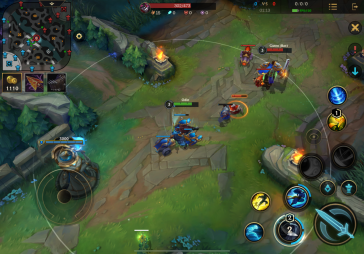
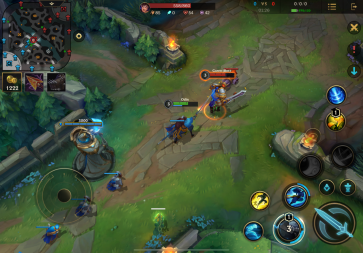
In situation 2, when you are leading and you want to make the lead gap even bigger. You freeze the minion near your tower and then you zone the enemy from coming close to the minion. Zoning is done by standing behind their minion and damaging them every time they try to come close. This will deny them XP and Gold. In this example, the Garren is too scared to even approach the minions.
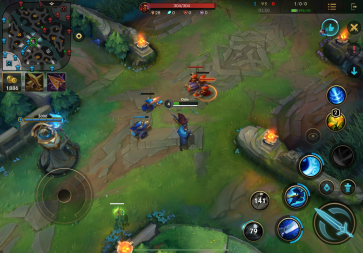
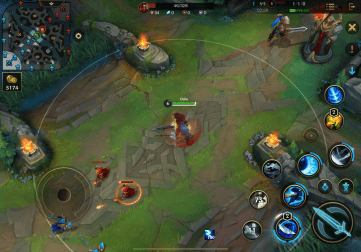
Slow Pushing
Slow pushing is a strategy that involves building up a large minion wave in a lane to exert pressure on the opponent’s turrets and create opportunities for objectives or team fights. Slow pushing can be an effective way to gain an advantage in the game, but it requires careful timing and positioning. There will be two different slow-pushing methods. One will be slow pushing for the laning phase and the other will be after laning phase is over
Slow Pushing during Laning Phase
There are a few methods to initiate a slow push during the laning phase:
- We last hit 1 melee minion and kill 1 range minion right at the start of the match. This will allow the minions to build up without pushing the lane too far. Then we focus on only last hitting the minions.
- We hit the enemy champion in order to force the enemy minions to hit us.
If it is hard to imagine through writing, watch this guide by a YouTuber called Strider here.
The overall concept is that we want to stack our minion waves together to form a big wave. This allows the wave to build up in size and strength, creating a powerful force that can be difficult for the opponent to defend against. We do this by only As the wave grows, players should position themselves near the front of the wave to prevent the enemy from clearing it quickly.
The key to successful slow pushing is to time it correctly. Players should aim to initiate a slow push just before an objective spawns, such as the Dragon or Baron, to force the opponent to choose between defending their turrets or contesting the objective. Slow pushing can also be used to create opportunities for team fights, as opponents may be forced to split up to defend multiple lanes.
Slow Pushing after Laning Phase
Slow pushing after the laning phase can be used to take the enemy tower without actually hitting them yourself. There are a few methods for slow pushing and you need to take into consideration what minion wave it is and where they are located.
First tower (no cannon wave):
- Last hit 1 melee minion and kill 1 range minion. Wait and last hit other minions until 2 waves come.
- Leave the lane and let it slow push
Canon Minion Wave (close to our 2nd tower method):
- When the enemy minion wave is near our second tower. We want to kill all their minions except for 1 ranged minion and 1 cannon minion.
- Leave that lane and let it slow push
There are many ways to slow-push a lane. As long as you understand the concept of slow pushing, you can experiment it to your own situations and make your own slow-pushing formula.
It’s worth noting that slow pushing can be risky if not executed correctly. Players must be aware of the map and keep an eye on the opponent’s movements to avoid being caught out of position. Additionally, slow pushing too early or too late can result in the opponent clearing the wave quickly or missing the objective altogether.
Another essential aspect of lane management is vision control. Players can place wards in strategic locations to keep track of enemy movements and prevent ganks. Proper vision control can also help players identify opportunities to roam and support their teammates in other lanes.
Overall, effective lane management involves a combination of proper minion wave manipulation, vision control, and map awareness. By mastering these skills, players can gain a significant advantage in Wild Rift and increase their chances of winning matches.
 Gamer's Handbook
Leave a comment